
 Microsoft Copilot
 Apple WebKit
 Google Chrome
 Google Gemini
 NVIDIA
 MongoDB
 Perplexity
 Node.js
 Jenkins
 FreeRDP
 The GNU C Library
 ISC BIND 9
 PowerDNS
 Zabbix
 Moodle
 TYPO3
TYPO3 Open WebUI
 Revive Adserver
 Apache Log4jMicrosoft CopilotApple WebKitGoogle ChromeGoogle GeminiNVIDIAMongoDBPerplexityNode.jsJenkinsFreeRDPThe GNU C LibraryISC BIND 9PowerDNSZabbixMoodleTYPO3Open WebUIRevive AdserverApache Log4j
Years Experience
CVEs Discovered
Public Speaking
Press Mentions
BREAKING
TO DEFEND
Senior security researcher working across vulnerability research, threat intelligence, and AI security. I break systems the way real attackers do, from core internet infrastructure like DNS and glibc to browsers, web platforms, and LLMs, and turn those findings into practical defenses, threat reports, and education so organizations can stay ahead of attackers.
Core Expertise
HIGHLIGHTS
DEF CON 34 Main Track
C(2)YA: Inside the Adversary's Inbox — six months of LLM-assisted research against five C2 frameworks (Havoc, Mythic, Sliver, Covenant, AdaptixC2) yielding 251 findings, 85 exploitable straight from the internet, and 28 takedown chains.
Cited by the UK AI Security Institute
Nytheon AI research cited by name in reference 26 of AISI's Frontier AI Trends Report, published on 18 December 2025.
HashJack Research
First known indirect prompt injection technique weaponizing URL fragments to manipulate AI browser assistants. Covered by Forbes, The Register, and The Hacker News.
Apple WebKit Vulnerabilities
Three flaws in Apple WebKit (CVE-2026-28917, CVE-2026-28962, CVE-2026-43700): a memory-safety crash, an information disclosure issue, and a cross-origin leak of sensitive user data.
NVIDIA TensorRT-LLM Vulnerabilities
Two flaws in NVIDIA's LLM inference engine (CVE-2026-24226, CVE-2026-24234): improper control of code generation, and a server-side request forgery in multimodal media fetching.
Operation Poisson
A 33-day French-speaking cybercrime operation captured command-by-command, revealing how a junior operator used Tailscale and OpenSSH to keep access after his C2 went offline. Covered by The Hacker News.
MongoDB Hall of Fame
Pre-authentication denial of service in MongoDB Server (CVE-2026-25611, High severity) and induction into the MongoDB Security Researcher Hall of Fame.
Core Infrastructure CVEs
A 2026 run of vulnerability discoveries across core infrastructure: BIND 9, PowerDNS, Jenkins, Apache Log4j, WordPress, Zabbix, and Google Chrome.
RECOGNITION & CVE DISCOVERIES
PRESS
RESEARCH21
Cato CTRL Threat Research: Operation Poisson - Analyzing a Cybercriminal's Entire Operation
Post-incident analysis of Operation Poisson, a 33-day campaign by a junior French-speaking threat actor against four individuals and a French automotive business. Captured command-by-command after the operator left SSH keys and a playbook in an open bucket, it shows how free-tier Havoc C2, a Python keylogger, and Tailscale plus OpenSSH built persistence that survived the C2 going offline.
CITATIONS & ACKNOWLEDGMENTS
Research cited in academic papers, policy reports, teaching, and threat intelligence.
Technical research reference · 2026-05-31
ChatGPhish: When the AI Assistant Becomes the Phishing VectorCloud Security Alliance
CSA AI Safety Initiative research note on prompt-injection phishing that credits Cato CTRL's HashJack in its comparison of indirect prompt injection techniques.
Distribution acknowledgment · 2026-05-21
USN-8293-1: Bind vulnerabilitiesUbuntu / Canonical
Ubuntu’s security notice names Vitaly Simonovich as the discoverer of CVE-2026-3039, the BIND 9 GSS-API TKEY memory-exhaustion vulnerability. This is a downstream acknowledgment of the same ISC disclosure.
Threat knowledge base · Created 2026-04-21
LAMEHUG, Software S9035MITRE ATT&CK
The LAMEHUG software entry cites Vitaly Simonovich’s Cato CTRL analysis in its APT28 attribution and technique mapping.
Technical research reference · 2026-04-10
AI Browser Extensions: Shadow AI’s Hidden Attack SurfaceCloud Security Alliance
CSA’s AI Safety Initiative research note references Cato CTRL’s HashJack research in its discussion of browser-extension risks.
Distribution acknowledgment · 2026-03-25
USN-8124-1: Bind vulnerabilitiesUbuntu Security
Ubuntu security notice crediting Vitaly Simonovich for discovering the ISC BIND vulnerabilities he reported (CVE-2026-3104 and CVE-2026-3119).
Technical research reference · 2026-03-03
Fooling AI Agents: Web-Based Indirect Prompt Injection Observed in the WildUnit 42 (Palo Alto Networks)
Palo Alto Networks Unit 42 analysis of web-based indirect prompt injection seen in the wild, citing Cato CTRL's HashJack technique.
Academic citation · 2026
Open Technical Problems in Open-Weight AI Model Risk ManagementTransactions on Machine Learning Research / arXiv
Cites Vitaly Simonovich’s Nytheon AI research in its discussion of open-weight models adapted for harmful uses.
Policy report citation · 2025-12-18
Frontier AI Trends ReportUK AI Security Institute (AISI)
The UK AI Security Institute's inaugural Frontier AI Trends Report cites Vitaly Simonovich by name in reference 26 for his Cato CTRL research on Nytheon AI, a platform of uncensored LLMs.
Technical research reference · Updated 2025-12-10
APT28 Cyber Threat Profile and Detailed TTPsPicus Security
Picus’s APT28 threat profile cites Vitaly Simonovich’s LAMEHUG analysis as reference 8.
Technical research reference · 2025-12-05
HashJack Attack Targets AI Browsers and Agentic AI SystemsF5 Labs
Technical analysis of HashJack vulnerability with enterprise security recommendations for AI agents and agentic systems.
Reprint · The Economist · 2025-11-07
How AI-powered hackers are stealing billionsMint / The Economist
A later Mint republication of The Economist’s reporting featuring Vitaly Simonovich’s AI security research.
Teaching reference · 2025-09-29
CS 419: Computer Security, authentication lecture slidesRutgers University — CS 419
Paul Krzyzanowski’s authentication lecture uses coverage of Vitaly Simonovich’s Immersive World research as an AI security example.
Policy report citation · 2025-09-23
Tipping the Scales: Emerging AI Capabilities and the Cyber Offense-Defense BalanceCenter for a New American Security
Caleb Withers’s report cites Vitaly Simonovich’s LAMEHUG analysis in its discussion of AI capabilities and cyber offense and defense.
Reprint · The Economist · 2025-08-20
How AI-enhanced hackers are stealing billionsMint / The Economist
English syndication of The Economist’s reporting on Vitaly Simonovich’s Immersive World research and AI-assisted cybercrime.
Reprint · The Economist · 2025-08-20
Cómo los hackers con inteligencia artificial roban miles de millones de dólaresInfobae / The Economist
Spanish-language syndication of The Economist’s coverage of Vitaly Simonovich’s research into AI-assisted cybercrime.
Reprint · Business Insider · 2025-03-27
ChatGPTでパスワードマネージャーを突破できるほど強力なマルウェアを作成することは可能?Business Insider Japan
Japanese translation of Business Insider’s interview about Vitaly Simonovich’s Immersive World research.
Reprint · Business Insider · 2025-03-22
How do you get ChatGPT to create malware strong enough to breach Google's password manager? Just play pretend.AOL / Business Insider
Syndicated Business Insider interview about Vitaly Simonovich’s Immersive World research.
Partner content · 2024-10-16
From Misuse to Abuse: AI Risks and AttacksThe Hacker News
Partner content featuring Vitaly Simonovich’s commentary on AI risks and attacks. The page’s byline is The Hacker News; this is recorded as participation rather than personal authorship or independent reporting.
Academic citation · 2021-09-01
Neural networks based domain name generationJournal of Information Security and Applications / Elsevier
Journal article by Zheng Wang and Yang Guo that includes a reference to Vitaly Simonovich’s research. NIST provides the publication metadata.
Academic citation · 2021-02
Intrusion Detection System for IoT Networks for Detection of DDoS AttacksNewcastle University
Monika Roopak’s doctoral thesis cites Vitaly Simonovich’s Imperva application-layer DDoS research.
Reprint · Imperva Blog · 2020-11
Bug hunting for a quick buck using WebLogic vulnerability (CVE-2020–14882)Security Boulevard
Syndicated version of your WebLogic CVE analysis, credited to Vitaly Simonovich.
Academic citation · 2020-09-24
An Anomaly Mitigation Framework for IoT Using Fog ComputingElectronics / UEA Digital Repository
Cites Vitaly Simonovich’s Imperva application-layer DDoS research as background for IoT anomaly mitigation.
Reprint · Imperva Blog · 2020-03
Remote File Inclusion (RFI) – Detecting the UndetectableSecurity Boulevard
Syndicated copy of your RFI blog, credited to Vitaly Simonovich.
Academic citation · 2020
Application-Layer DDoS Defense with Reinforcement LearningIEEE/ACM IWQoS
Cites Vitaly Simonovich’s Imperva research on a 13-day, 292,000 requests-per-second application-layer DDoS attack.
Reprint · Imperva Blog · 2020
Never Leave Your Cloud Database Publicly AccessibleImperva Research Labs – Medium
Medium republication of your cloud DB exposure research, credited to you and Sarit Yerushalmi.
Reprint · Imperva Blog · 2019-07-24
Imperva Blocks Our Largest DDoS L7/Brute Force Attack Ever (Peaking at 292,000 RPS)Security Boulevard
Syndicated version of your L7 DDoS blog, credited by Vitaly Simonovich.
Reprint · Imperva Blog · 2019-04
The Ping Is The Thing: Popular HTML5 Feature Used To Trick Chinese Mobile Users Into Joining Latest DDoS AttackIT Security Guru
Repost of the Imperva article, credited to Vitaly Simonovich and Dima Bekerman.
URL contains 2019-04-18; supplied evidence report records a displayed date of 2019-11-12. Publication date remains unresolved.
Reprint · Imperva Blog · 2019-03
Hundreds of Vulnerable Docker Hosts Exploited by Cryptocurrency MinersSecurity Boulevard
Syndicated copy of your Docker cryptominer research, credited by Vitaly Simonovich.
Threat knowledge base · Undated
LAMEHUG malware-family entryFraunhofer FKIE / Malpedia
Malpedia’s LAMEHUG entry lists Vitaly Simonovich by name and links his Cato CTRL analysis in its references.
SPEAKING12
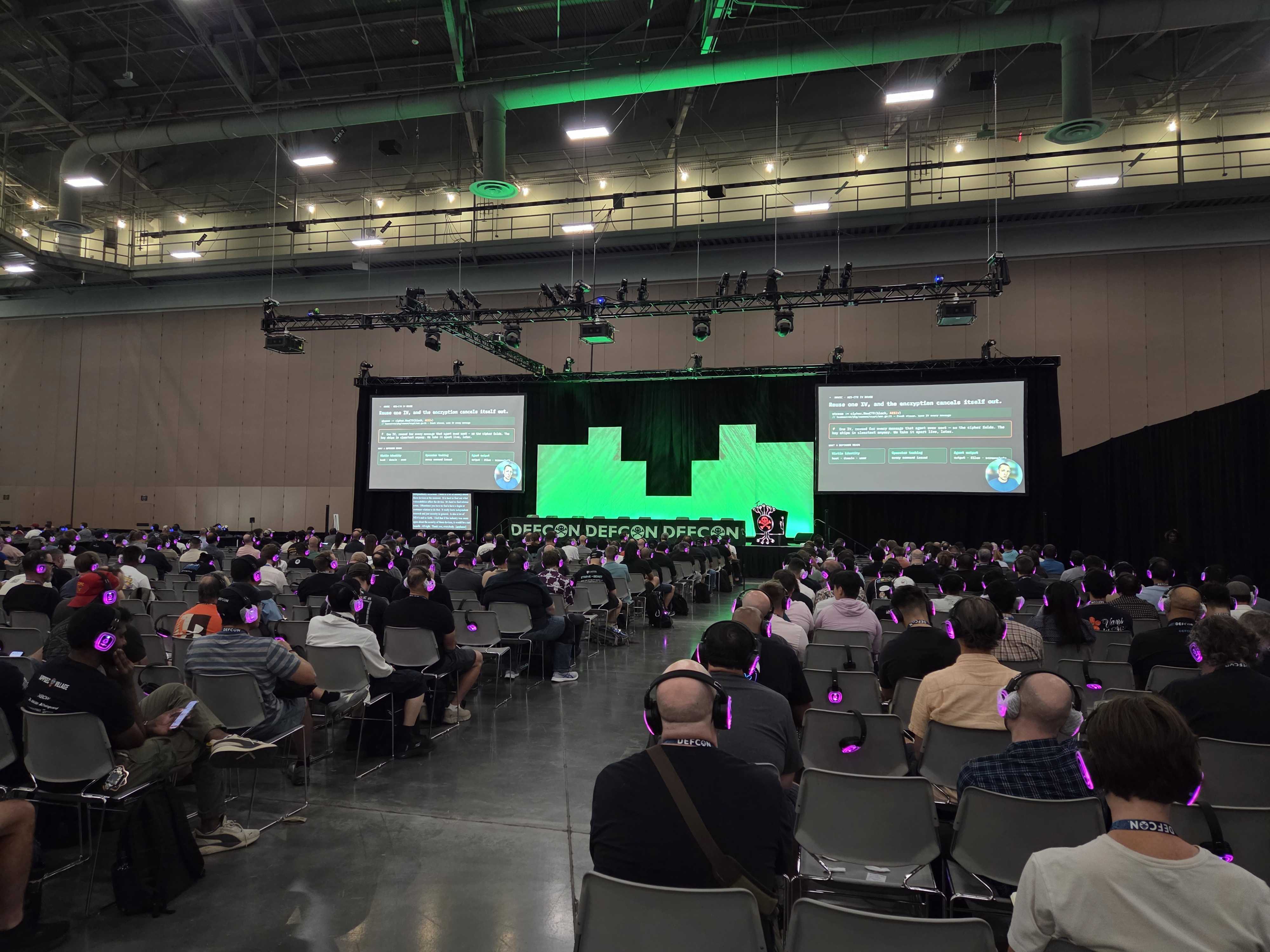
C(2)YA: Inside the Adversary's Inbox
Six months of LLM-assisted research against five C2 frameworks — Havoc, Mythic, Sliver, Covenant and AdaptixC2 — surfacing 251 design flaws and vulnerabilities, 85 of them exploitable from the internet with no prior access, plus 28 takedown chains and crypto failures that decrypt all C2 traffic from a single recovered key.
MY BLOG12
glibc wordexp() Memory Initialization Flaw - CVE-2025-15281
A 26-year-old Use-After-Free vulnerability in glibc's wordexp() function when using WRDE_REUSE and WRDE_APPEND flags together, affecting versions 2.0 through 2.42.
Get in touch
Lectures, interviews, or collaborations?
Always open to discussing new opportunities, interesting projects, or just chatting about security and AI.